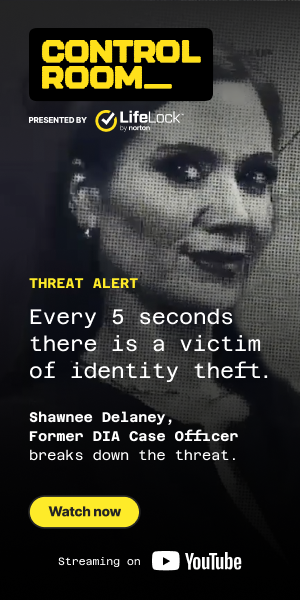
Lifelock control room The Challenge
Lifelock came to us with a candid admission: while the brand had long been associated with identity protection, it had never truly succeeded in creating content that was entertaining.
Meanwhile, competitors were winning with smart edutainment, content that was 70–80% entertainment and 20–30% education, building cultural relevance while reinforcing product value.
Lifelock needed to:
Move beyond product-heavy messaging
Compete in a crowded digital content landscape
Resonate with middle Americans deeply concerned about cybersecurity
Speak authentically to a patriotic, right-leaning audience who feel increasingly vulnerable to scams, identity theft, and foreign cyber threats
The opportunity wasn’t to sell harder — it was to lead the conversation.
Strategy
We leaned into our strength in branded entertainment and created a long-term content property: LifeLock Control Room.
The concept: a 30–40 minute podcast-style series hosted by real American protectorsm Shawnee Delaney (former CIA officer) and Tyler Gray (former Army Ranger and Delta Operator), discussing emerging cyber threats with expert guests.
The tone was 70% entertainment, 30% education; credible, urgent, and accessible without feeling alarmist. LifeLock appeared as a sponsor, integrated naturally rather than driving overt product messaging.
The objective was long-term: build a YouTube audience, grow subscribers, and establish LifeLock as a trusted authority in cybersecurity, positioning protection as a necessity in an increasingly hostile digital landscape
Execution
In just five months, we developed and launched a fully realized 12-episode branded entertainment series, all while guiding our client through a format that was entirely new to them.
Because branded entertainment was both novel and daunting for LifeLock, my role extended beyond production oversight. I shepherded the client through the full process — soup to nuts — ensuring constant communication, clear expectations, and shared visibility into how we would ultimately deliver a fully formed Season One.
This included:
Counseling through host casting and final talent selection
Advising on guest strategy across ethical hackers, law enforcement, and academic experts
Overseeing show format development, episode structuring, and scripting
Managing set design, visual identity, and graphics packages
Liaising closely with legal to ensure compliance, particularly around claims language and avoiding any implication that LifeLock could “prevent” identity theft
Simultaneously, while building the show itself, I led the development of a 500+ asset promotional ecosystem. This required coordinating cross-functional teams including graphic designers, art directors, writers, programmers, editors, and animators to produce:
12 long-form YouTube episodes (plus audio-only versions)
3–4 short-form soundbite cuts per episode in multiple aspect ratios for social promotion plus longer form Facebook cutdowns
(1) Blog Post per episode
(1) Email Blast per episode
A dedicated landing page, literal hundreds of HTML 5 and static banner ads, native units, paid social assets, and Reddit placements
All creative and media efforts were designed to work in tandem — driving traffic to YouTube, building subscribers, and establishing LifeLock Control Room as a long-term content platform.
Results
The campaign exceeded all client-set KPIs by at least 3x. Most notably, we enjoyed a 66.5% Engagement Rate on Boosted Social Assets.
Lifelock recognized a 2,000 increase in YouTube subscibers.
The show has been renewed for a second season which is currently in pre-production.
Both Tyler, Shawnee and several of the guests of Control Room have been fully integrated into the LifeLock family, attending press events and trade shows on the client’s behalf and participating in influencer and affiliate program initiatives.